We encourage authors to consider submitting their manuscripts to an Invited Session, when possible, rather than to a Regular Session, as this can help ensure their work reaches the most relevant and engaged audience.
We look forward to your contributions and to an engaging session at ITSC 2026!
Motivation and General Scope
Connected and Automated Vehicles (CAVs) are shaping the future of Intelligent Transportation
Systems (ITS). Reliable operation requires strong safety assurance, scalability, and real-time
performance under dense traffic interactions and in the presence of heterogeneous road users.
Learning-based methods are increasingly used in CAVs for perception, prediction, and decision-making,
but they remain difficult to validate for safety-critical operation, particularly under
distribution shift and rare events. Model-based optimal control offers a structured approach to
constraint enforcement and safety analysis, yet it faces practical limitations related to modeling
accuracy, nonlinearity, nonconvexity, scalability, and adaptation to complex traffic interactions.
Bridging learning-based methods and optimal control is therefore essential for reliable CAV operation
in ITS, including mixed autonomy settings, connected cooperation, and large-scale deployment.
Topics of Interest
We invite contributions on theory and applications in the following categories:
Safety-Enhanced Learning: control-theoretic methods to assure learning-based methods,
including but not limited to
Constraint- and risk-aware learning: constrained Markov decision processes, chance constraints, safe/offline learning under data limitations.
Runtime safety assurance: safety filters and shields.
Verification and validation: falsification, scenario generation, coverage-driven testing.
Safety-aware perception/prediction/localization for multi-agent learning.
Learning-Enhanced Control: learning components that improve control-theoretic methods,
including but not limited to
Learned models for prediction/control: system identification, residual dynamics, disturbance/uncertainty models, learned interaction predictors for traffic agents.
Learning-augmented predictive control: learned dynamics refinements, learned uncertainty sets/tubes, data-driven objective and constraint design, bilevel tuning, learning warm-starts and surrogate solvers for real-time deployment.
Multi-agent optimal control with learning components.
Organizers
RWTH Aachen University
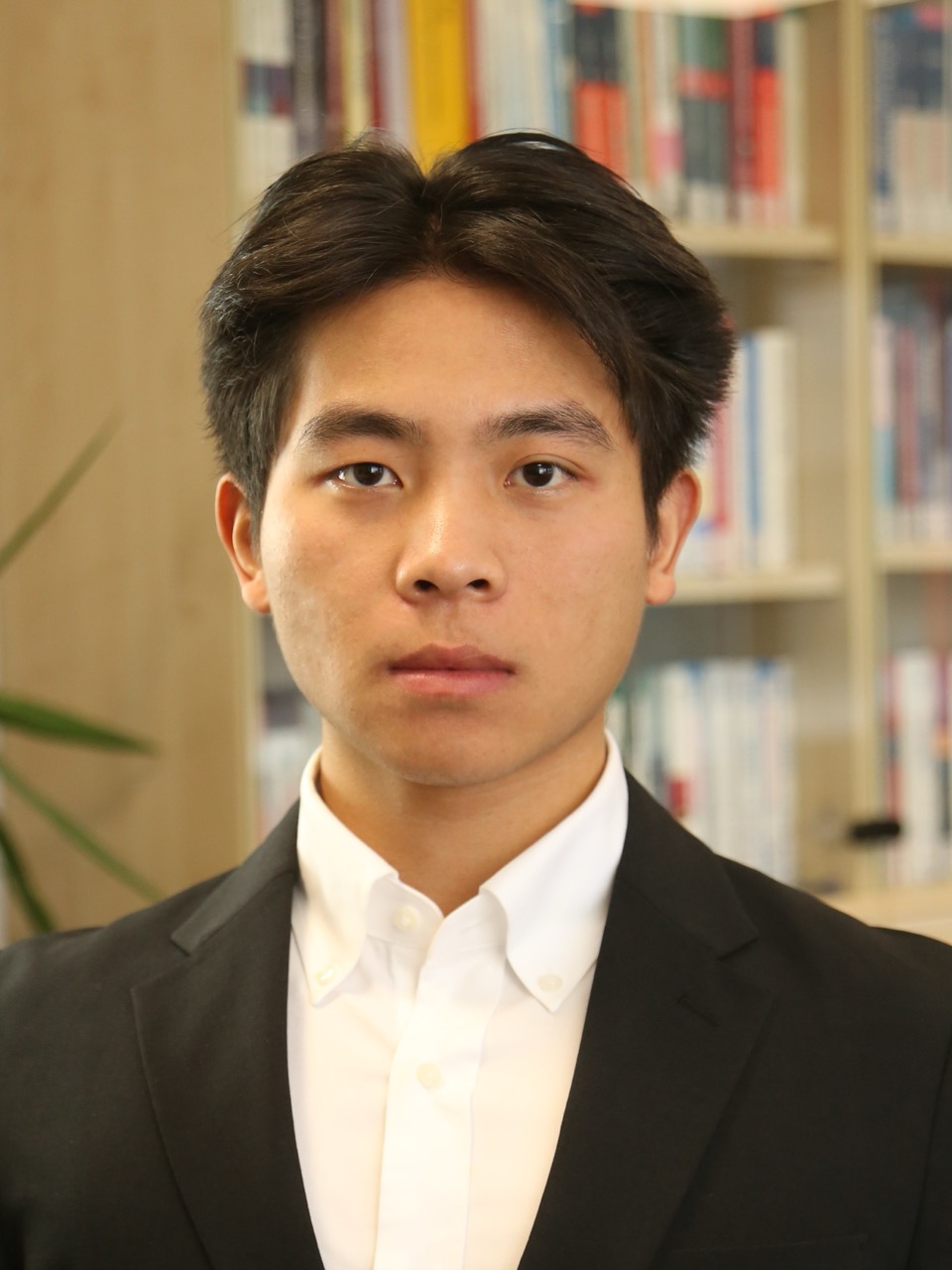
Jianye Xu received the B.Sc. degree with distinction in Mechanical
Engineering from the Beijing Institute of Technology, China, in 2020, and
the M.Sc. degree with distinction in Automation Engineering from RWTH
Aachen University, Germany, in 2022. He is currently pursuing a Ph.D. in
Computer Science at RWTH Aachen University. His research focuses on
learning- and optimization-based multi-agent decision-making and its
applications in connected and automated vehicles.
University of the Bundeswehr Munich
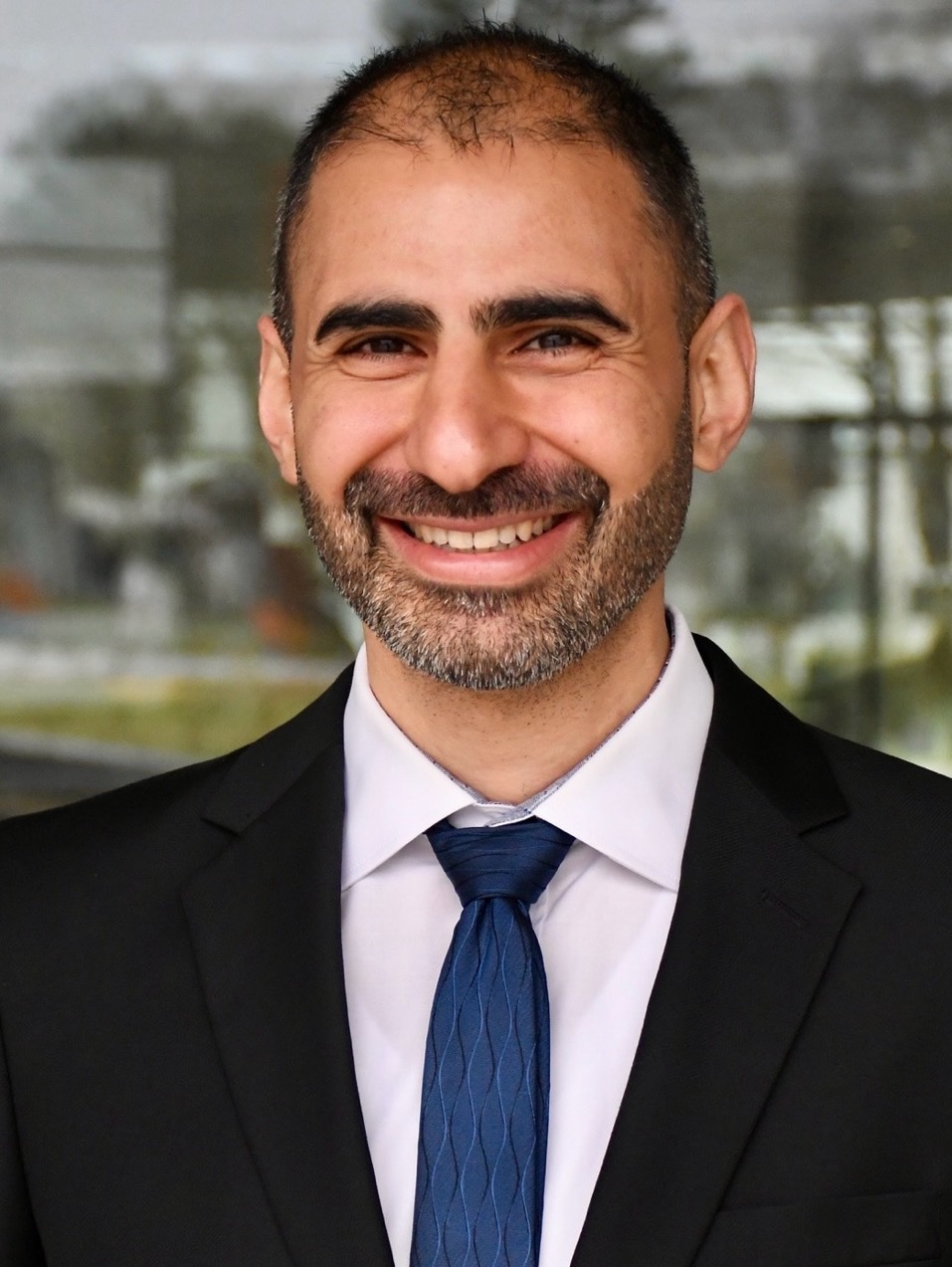
Prof. Bassam Alrifaee holds the Professorship for Adaptive Behavior of
Autonomous Vehicles in the Department of Aerospace Engineering at the
University of the Bundeswehr (UniBw) Munich. His research focuses on the
intelligent control of autonomous systems, with particular emphasis on
distributed control, cooperative localization, software architectures, and
experimental validation. Before joining UniBw Munich in 2024, he served
as a Senior Researcher and Lecturer at RWTH Aachen University, where he
founded the Cyber-Physical Mobility (CPM) group and the CPM Lab. In
2023, he was a Visiting Scholar at the Information and Decision Science Laboratory at the
University of Delaware, USA. Prof. Alrifaee has secured research grants from various
institutions and received awards for his advisory and editorial contributions. He is a Senior
Member of the IEEE.
Cornell University
Andreas A. Malikopoulos is a Professor in the School of Civil &
Environmental Engineering and the Director of the Information and
Decision Science Lab at Cornell University. Prior to these appointments, he
was the Terri Connor Kelly and John Kelly Career Development Professor
in the Department of Mechanical Engineering (2017–2023) and the
founding Director of the Sociotechnical Systems Center (2019–2023) at the
University of Delaware (UD). Before he joined UD, he was the Alvin M.
Weinberg Fellow (2010–2017) in the Energy & Transportation Science
Division at Oak Ridge National Laboratory (ORNL), the Deputy Director of the Urban
Dynamics Institute (2014–2017) at ORNL, and a Senior Researcher in General Motors Global
Research & Development (2008–2010). He received a Diploma from the National Technical
University of Athens, Greece, and his M.S. and Ph.D. degrees from the University of
Michigan, Ann Arbor, in 2004 and 2008, respectively, all in Mechanical Engineering. His
research interests span several fields, including analysis, optimization, and control of cyber-physical systems; decentralized stochastic systems; stochastic scheduling and resource
allocation; and learning in complex systems. Dr. Malikopoulos is the recipient of several
prizes and awards, including the 2007 Dare to Dream Opportunity Grant from the University
of Michigan Ross School of Business, the 2007 University of Michigan Teaching Fellow, the
2010 Alvin M. Weinberg Fellowship, the 2019 IEEE Intelligent Transportation Systems
Young Researcher Award, and the 2020 UD's College of Engineering Outstanding Junior
Faculty Award. He has been selected by the National Academy of Engineering to participate in
the 2010 German-American Frontiers of Engineering (FOE) Symposium and organize a
session on transportation at the 2016 European-American FOE Symposium. He has also been
selected as a 2012 Kavli Frontiers of Science Scholar by the National Academy of Sciences.
Dr. Malikopoulos is an Associate Editor of Automatica and IEEE Transactions on Automatic
Control, and a Senior Editor of IEEE Transactions on Intelligent Transportation Systems. He is
a Senior Member of the IEEE, a Fellow of the ASME, and a member of the Board of
Governors and Distinguished Lecturer of the IEEE Intelligent Transportation Systems Society.
Technical University of Munich
Amr Alanwar is an Assistant Professor at Technical University of Munich,
Germany, and an Adjunct Assistant Professor at Constructor University,
Germany. He received the M.S. degree in computer engineering from Ain
Shams University, Cairo, Egypt, in 2013 and the Ph.D. degree in computer
science from the Technical University of Munich in 2020. He was a Post-doctoral Researcher at KTH Royal Institute of Technology. He was also a
Research Assistant at the University of California, Los Angeles. He received
the Best Demonstration Paper Award at the 16th ACM/IEEE International Conference on
Information Processing in Sensor Networks (IPSN/CPSWeek 2017) and was a finalist in the
Qualcomm Innovation Fellowship for two years in a row.
Nanyang Technological University
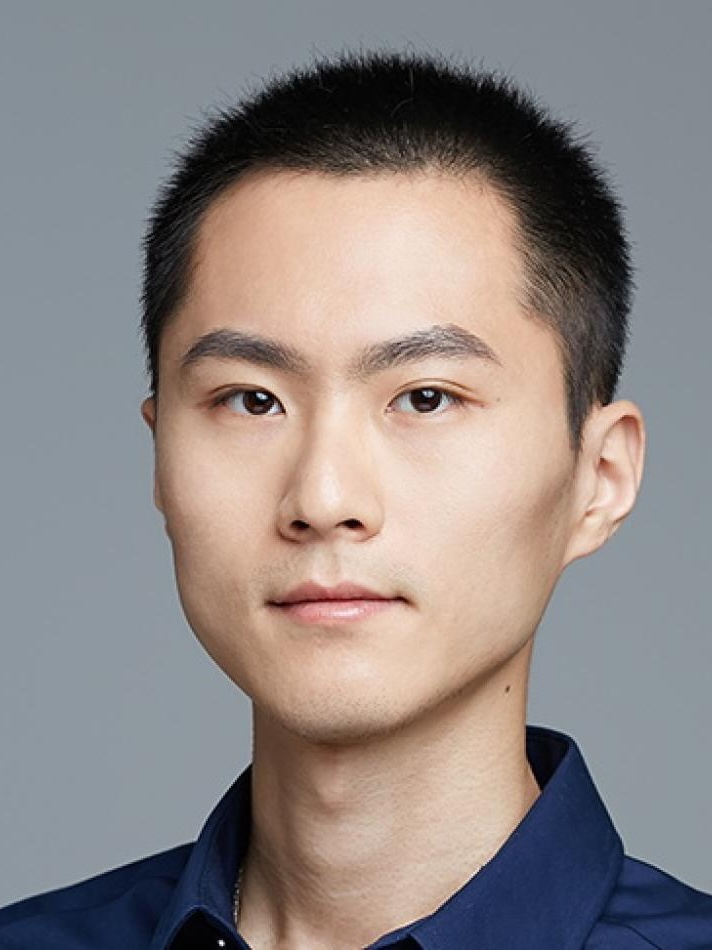
Chen Lv (Senior Member, IEEE) received a Ph.D. degree from the
Department of Automotive Engineering, Tsinghua University, China, in
2016. He is currently an Associate Professor at the School of Mechanical
and Aerospace Engineering, Nanyang Technological University, Singapore.
He also holds joint appointments as the Cluster Director in Future Mobility
Solutions at ERI@N, Thrust Lead in Smart Mobility and Delivery,
Continental-NTU Corp Lab, and the Program Lead in Next Generation
AMR, Schaeffler-NTU Joint Lab. His research focuses on advanced
vehicles and human-machine systems, where he has contributed over 200 papers and obtained
12 granted patents in China. Dr. Lv serves as an Associate Editor for IEEE Transactions on
Intelligent Transportation Systems, IEEE Transactions on Vehicular Technology, IEEE
Transactions on Intelligent Vehicles, etc.
University of Alberta
Ehsan Hashemi is an Assistant Professor in the Department of Mechanical
Engineering at the University of Alberta (since 2021), and the Director of
the Networked Optimization, Diagnosis, and Estimation (NODE) lab. He
earned his PhD in Mechanical and Mechatronics Engineering from the
University of Waterloo (Canada). He was a Research Assistant Professor at
the University of Waterloo and a Visiting Professor at the school of
Electrical Engineering and Computer Science, KTH Royal Institute of
Technology (Sweden). His research portfolio includes both large- and small-scale projects
with Canadian and international industry partners, resulting in multiple technology transfer
and deployment activities. Dr. Hashemi is a Senior Member of IEEE, and his expertise spans
control theory, robot learning, human perception, and human–machine interaction.
Delft University of Technology
Dr. Javier Alonso-Mora is an associate professor at the Cognitive Robotics
Department of the Delft University of Technology, where he leads the
Autonomous Multi-Robots Lab. Before joining TU Delft, Dr. Alonso-Mora
was a postdoctoral associate at the Massachusetts Institute of Technology
(MIT). He received his Ph.D. degree in robotics from ETH Zurich. His main
research interest is in navigation, motion planning, learning, and control of
autonomous mobile robots, and teams thereof, that interact with other robots
and humans in dynamic and uncertain environments. He is the recipient of
multiple awards, including the IEEE Transactions on Automation Science and Engineering
Best Paper Award (2024), an ERC Starting Grant (2021), and the ICRA Best Paper Award on
Multi-Robot Systems (2019). He serves as an Associate Editor for the IEEE Transactions on
Robotics and for Springer Autonomous Robots.
Technical University of Munich
Johannes Betz is an assistant professor in the Department of Mobility
Systems Engineering at the Technical University of Munich (TUM). He is
one of the founders of the TUM Autonomous Motorsport team. His research
focuses on developing adaptive dynamic path planning and control
algorithms, decision-making algorithms that work under high uncertainty in
multi-agent environments, and validating the algorithms on real-world
robotic systems. Johannes earned a B.Eng. (2011) from the University of
Applied Science Coburg, an M.Sc. (2012) from the University of Bayreuth,
an M.A. (2021) in philosophy from TUM, and a Ph.D. (2019) from TUM.
University of Pennsylvania
Rahul Mangharam (Senior Member, IEEE) Professor of Electrical &
Systems Engineering, University of Pennsylvania. He leads xLAB for
building Safe Autonomous Systems and conducts research at the
intersection of formal methods, machine learning and controls. He is the
Penn Director for the US DoT’s $20MM Safety21 National University
Transportation Center. Rahul received the 2016 US Presidential Early
Career Award (PECASE) from President Obama and has won several ACM
and IEEE best paper awards. He founded RoboRacer.AI for teaching the
foundations of autonomous vehicles across 90+ universities worldwide.