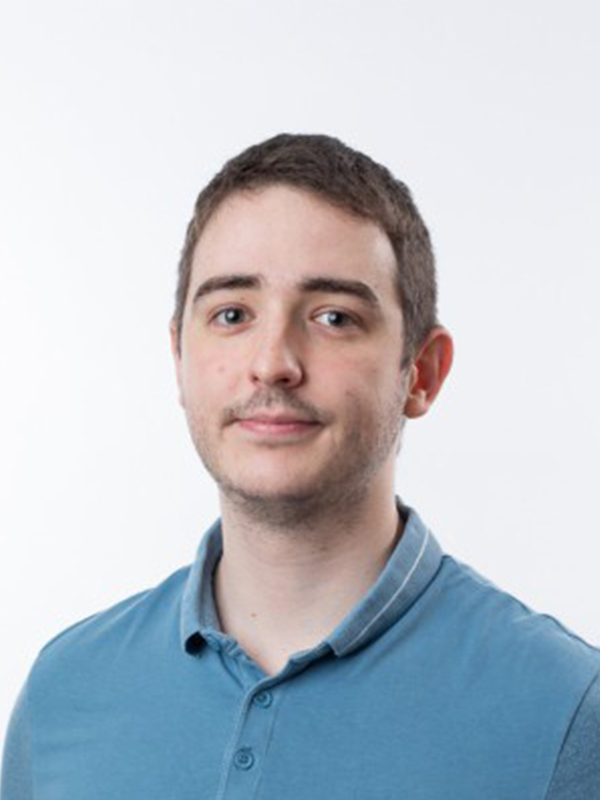
We need to update the time table for the workshop. The presentation of Walter Zimmer will be rescheduled to 12:40 PM and the presentation of Simon Schäfer will take place earlier at 12:00 PM.
2026-09-01 — Program finalized
The timeslot of this workshop has been finalized by the conference organizers. The program below reflects the confirmed schedule. We are looking forward to an engaging and productive workshop at IEEE ITSC 2026.
2026-06-02 — Speaker lineup finalized
The speakers for this instance of IPerSense have been finalized. Detailed information about
the speakers and their talks is listed in the Speakers section below.
The iteration of IPerSense focuses on infrastructure-based perception systems for connected
and automated mobility.
Future automated and connected vehicles increasingly rely on
infrastructure-based perception to overcome line-of-sight limitations of
onboard sensors, enhance redundancy in distributed sensor networks, and enable
reliable, uncertainty-aware state estimation at safety-critical locations.
By offloading part of the perception task to the infrastructure, road
operators can detect occluded road users, support cooperative maneuvers, and
provide trusted situational awareness to vehicles and traffic management
centers.
Infrastructure-based perception systems use roadside units equipped with
cameras, lidar, radar, and in-road load-sensing technologies. In-road sensors
capture tire contact patches and dynamic wheel loads within the pavement,
complementing overhead bounding-box sensing with axle configurations and
traffic-induced forces. These measurements support safety applications and the
development of digital twins of road infrastructure.
Validation of these systems spans three levels: simulation, small-scale
experimentation, and full-scale deployment. Simulation enables rapid
prototyping, while small-scale testbeds provide an intermediate step between
virtual studies and costly field trials.
Detailed information about the organizer team for this workshop instance is listed on The Organizers.
Topics of interest
The workshop focuses on the following themes:
Infrastructure-based perception for automated and connected vehicles
Roadside sensing with cameras, lidar, radar, and related sensor suites
In-road load-sensing technologies and traffic-induced force measurements
Redundancy, uncertainty-aware state estimation, and safety-critical operation
Cooperative support for occluded road users and connected maneuvers
Digital twins of road infrastructure and validation workflows
Simulation, small-scale experimentation, and full-scale deployment
Speakers
Below you find the list of the international list speakers for this workshop instance.
Robert Gee is Strategy Manager for Standards, Government Affairs, and Intellectual Property at
AUMOVIO (formerly Continental Automotive), USA, where he focuses on advancing connected,
cooperative, and automated mobility through industry standards, policy engagement, and
ecosystem development.
With more than 30 years of experience in automotive and communications systems, he has held
technical and leadership roles at IBM, Loral, Motorola, Continental, and AUMOVIO. His work
spans military and commercial communications, secure government networks, and large-scale
vehicle connectivity systems deployed across global markets. He holds a Master’s degree in
Computer Science, a Bachelor’s degree in Electrical Engineering, and is an inventor on more
than 20 issued patents.
Robert is also a national Emmy Award recipient for his work as a producer at CNN, where he
pioneered modern citizen photojournalism approaches and contributed to globally syndicated
news content.
At this iteration of IPerSense, he will open the session with
the presentation “Deployment Timing vs. Methodology: What You Don’t Know Can Hurt You,”
highlighting the critical role of infrastructure-based perception in enabling scalable, safe,
and practical deployment of cooperative and automated driving systems.
Walter Zimmer is a Postdoctoral Researcher at the University of California, Los Angeles (UCLA), USA and a former researcher at the Technical University of Munich (TUM), Germany, where he worked on large-scale cooperative perception systems for autonomous driving. His research focuses on infrastructure-based perception, multi-modal sensor fusion, and digital twins for intelligent transportation systems.
During his time at TUM, he contributed to major real-world deployments of roadside sensing systems and co-developed the TUMTraf-V2X dataset, a large-scale real-world benchmark for cooperative vehicle–infrastructure perception and tracking. His work includes camera- and LiDAR-based 3D object detection, multi-sensor calibration, and the creation of digital traffic representations used for evaluating connected and automated driving systems.
At this iteration of IPerSense, he will present “Roadside Infrastructure Intelligence: Generating Live Digital Traffic Twins to Support Autonomous Driving,” demonstrating how infrastructure-based sensing can generate live digital twins of traffic scenes and enable scalable, robust perception for future autonomous driving systems.
Markus Geisler is AI Technology Lead for Mobility Applications at the Institute of AImotion, Technische Hochschule Ingolstadt (THI), Germany. Previously, he worked at the CARISSMA Institute of Automated Driving (THI), where he conducted research on intelligent transportation systems and cooperative perception. His research focuses on infrastructure-based perception, vehicle-to-everything (V2X) communication, and large-scale multi-sensor datasets for cooperative autonomous driving.
He has contributed to real-world deployments and dataset development for infrastructure-vehicle
perception systems, including multi-modal setups combining roadside LiDAR and camera sensing with
connected vehicles for 3D object detection, tracking, and occlusion-aware scene understanding.
His work supports the development of scalable infrastructure sensing systems and digital
representations of urban traffic environments.
At this iteration of IPerSense, he will present “Infrastructure-Based Perception Systems for
Safety Applications in Urban Traffic,” highlighting how roadside sensing infrastructure can
improve safety-critical perception performance in complex urban environments and support the
design of future cooperative mobility systems.
Simon Schäfer is a Postdoctoral Researcher at the Professorship for Adaptive Behavior of Autonomous Vehicles at the University of the Bundeswehr Munich, Germany. He received his B.Sc. and M.Sc. in Computational Engineering Science from RWTH Aachen University, where he also completed his Ph.D. in 2026. His research focuses on infrastructure-based perception and localization for automated vehicles and intelligent transportation systems.
His research focuses on infrastructure-based localization of traffic participants, sensor
fusion, and the development of cyber-physical mobility systems. He works on bridging simulation,
small-scale experimental platforms, and full-scale real-world deployments, with a particular
emphasis on evaluating the transferability and scalability of connected and automated vehicle
(CAV) systems across different testing domains.
His contributions include the design and analysis of small-scale CAV testbeds, benchmarking
methodologies for cooperative mobility systems, and experimental frameworks that combine
simulation and physical test environments. He has also contributed to research on the
Cyber-Physical Mobility Lab, enabling reproducible evaluation of cooperative driving and
perception systems across simulation and hardware.
At this iteration of IPerSense, he will present “Filling the Gap: From Sim to Small to Full
Scale Testing for Roadside Sensing Systems,” addressing how infrastructure-based perception
systems can be systematically developed and validated across simulation, scaled experiments,
and full deployment environments.
Joseba Gorospe is a Postdoctoral Researcher at the Institute of Intelligent Transport
Systems at Johannes Kepler University (JKU) Linz, Austria. He received his PhD in Connected
and Automated Vehicles from Mondragon Unibertsitatea, Spain, where he focused on hybrid vehicular
communication systems integrating IEEE 802.11p/802.11bd and C-V2X/NR-V2X technologies, as well
as AI-based optimization of radio access selection for intelligent transportation systems.
His research interests include vehicle-to-everything (V2X) communications, cooperative and
connected automated mobility, mobile edge computing, and AI-driven intelligent transportation
systems. He works on integrating heterogeneous communication and sensing data to improve
real-time traffic awareness, system reliability, and safety in connected mobility environments.
He is involved in European and national projects such as MITHOS, InSeCTT, AutoLib, and AutoEv@l,
focusing on AI-enabled mobility services and infrastructure-based intelligence for
transportation systems.
At this iteration of IPerSense, , he will present “ADAS Reliability and Road Condition
Estimation Using Vehicle-Mounted Sensors,” highlighting how vehicle-based perception can be used
to infer infrastructure state, complement roadside sensing systems, and “look over the horizon”
by using perception not only to understand the environment, but also to characterize and predict
infrastructure conditions.
Please find the detailed program for this workshop instance below.
Time
Event Type
Remarks
11:30 am - 11:40 am
Opening Remarks by organizers
10 min introduction
11:40 am - 12:00 pm
Robert Gee
AUMOVIO, USA
Deployment Timing vs. Methodology: What you don’t know can hurt you
15 min talk + 5 min Q/A
12:00 pm - 12:20 pm
Simon Schäfer
University of the Bundeswehr Munich, Germany
Filling the Gap: From Sim to Small to Full Scale Testing for Roadside Sensing Systems
15 min talk + 5 min Q/A
12:20 pm - 12:40 pm
Markus Geisler
AImotion at Technische Hochschule Ingolstadt, Germany
Infrastructure-Based Perception Systems for Safety Applications in Urban Traffic
15 min talk + 5 min Q/A
12:40 pm - 1:00 pm
Walter Zimmer
University of California, Los Angeles, USA
Roadside Infrastructure Intelligence: Generating Live Digital Traffic Twins to Support Autonomous Driving
15 min talk + 5 min Q/A
1:00 pm - 2:00 pm
Lunch Break
60 min break
2:00 pm - 2:20 pm
Joseba Gorospe
Johannes Kepler Universität Linz, Austria
ADAS Reliability and Road Condition Estimation Using Vehicle-Mounted Sensors
15 min talk + 5 min Q/A
2:20 pm - 2:55 pm
All Speakers - Panel Discussion
35 min moderated by organizers
2:55 pm - 3:00 pm
Conclusion and Closing Remarks by organizers
5 min farewell
Attendance and registration
This workshop is held at IEEE ITSC 2026.
Participation requires registration for IEEE ITSC 2026 at least for the
workshop day and is included in a full conference registration. See the official conference website for registration, venue, and local
information:
IEEE ITSC 2026.
This venue of this workshop is technically sponsored by the IEEE and the IEEE Intelligent Transportation Systems Society (ITSS).